How ordering works here
Ordering happens on the phone — call us and we take your details. From there you get a clear line of communication: your order is confirmed a number of times before a truck ever loads, by phone or text, and if anything changes on our end, you hear it from us first. Nothing falls in a crack between here and the plant.
How concrete ordering works
Concrete sells by the cubic yard. Use the calculator for your shape and give yourself a margin — the math is only as good as the measurements you put in. Ground isn't flat and forms flex; running short mid-pour costs far more than the spare half yard. Loads under a few yards carry a short-load fee — we'll tell you what it is before you book, not after.
Strength, in plain English
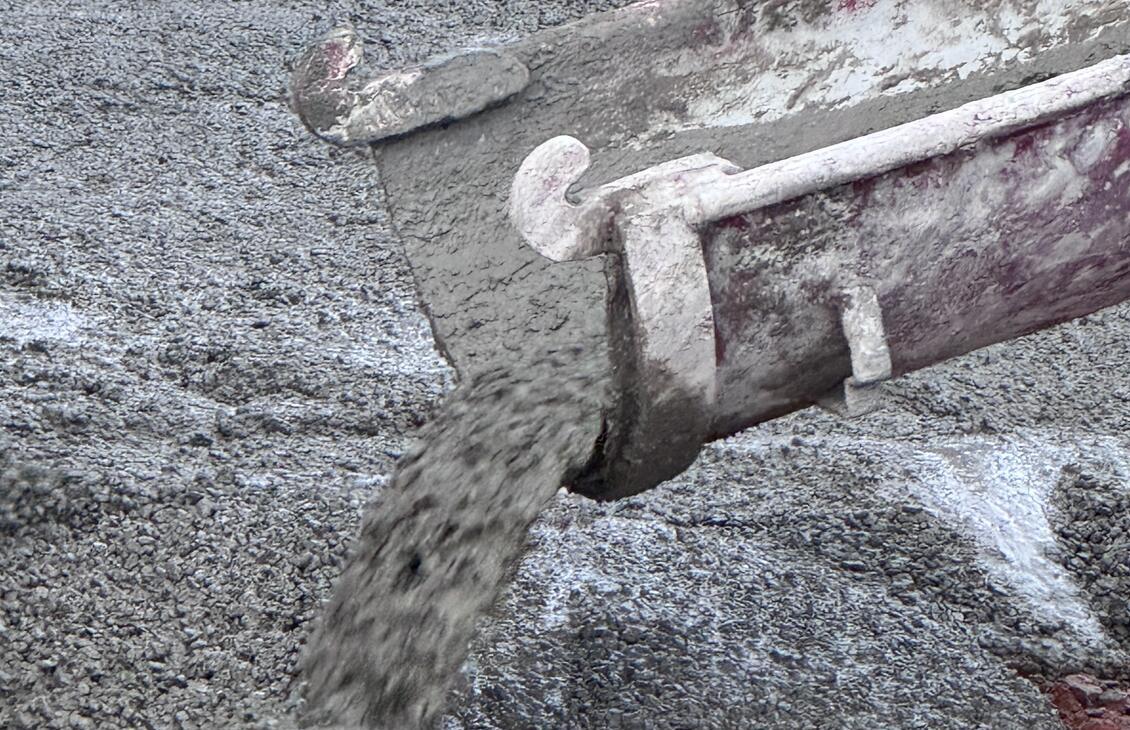
Concrete strength is measured in PSI. Most residential flatwork runs 3,000–3,500. Footings and structural work usually spec 3,000–4,000. Driveways in freeze-thaw country do better at 4,000. Engineered and DOT work calls its own number — it's on your plans. Not sure? Tell us what you're pouring and we'll tell you what we'd order. If your job has an engineer or an inspector, their number wins.
Slump — how wet it shows up
Slump is how loose the mix flows, measured in inches — the lower the number, the stiffer it stands; the higher, the easier it moves. You order it, it goes on the ticket, and we batch to it. Not sure what to ask for? Tell us what you're pouring and how you're placing it, and we'll point you in the right direction.
Mix options
- Fiber — mixed-in reinforcement that helps control surface cracking. Common on slabs and drives.
- Hot water & accelerator — cold-morning tools; keeps the pour workable and the schedule honest in winter.
- Ice & retarder — the summer versions; slows a hot mix down so July doesn't rush your crew.
- Pump mix — batched to move through a line without wearing out your pump or your patience. Say the word "pump" when you order and we take it from there.
Getting the truck to the pour
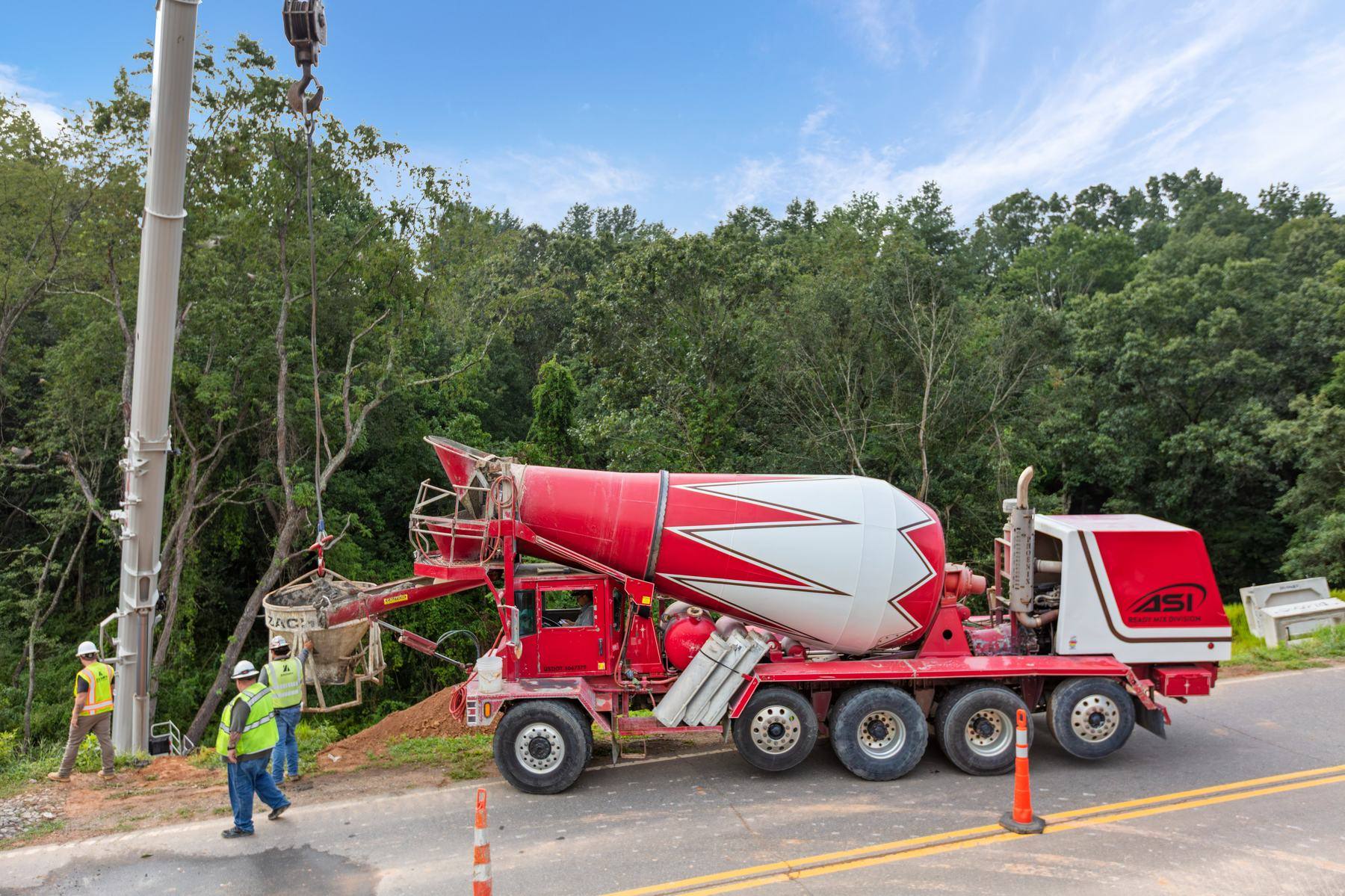
A loaded mixer runs roughly 60,000–80,000 pounds and moves slower than a car. Make sure you tell us about:
- Gates — and the gate code, if there is one
- Low wires
- Tight turns
- Soft ground
- Steep grades
- Bridges — and what weight they'll carry
Our all-wheel-drive trucks reach places others turn around on — but only if we know what we're driving into. Plan a washout spot (a corner of gravel or a wheelbarrow works). Trucks leaving the road onto your property travel at the owner's risk — that's every concrete company, not just us.
Additional services we offer
- Chute — straight off the truck, reaches maybe 15 feet. The default when the truck can park next to the pour.
- Boom pump — overhead concrete pumping: an articulating boom for reach and height when the truck can't get to the pour.
- Stone slinger — aggregate placement: a conveyor that throws rock and gravel exactly where you want it.
Ready mix, boom pump, stone slinger — we can bring any one of them or all three, bundled together or one at a time. Tell us what the job needs and we'll put the right combination on it.
Weather and timing
Book as early as you can — slots go to whoever calls first, mornings go fastest. If weather turns on your pour day, call. We'd rather move your slot than send concrete into the rain. Rescheduling is normal business up here, not a favor.